I have spent some time wondering about the fundamental questions about crafting inputs to atomistic ML models, which are also closely tied to their architectures. More specifically, in terms of descriptors, what are the ingredients central to their mathematical representations? How can we incorporate equivariance with the physical symmetries underlying structures in 3D Euclidean space? How to ensure that two structures unrelated by symmetries are mapped to different descriptors? How can we capture long-range (Coulomb) interactions into machine learning models while keeping a local description of atomic environments? Another line of research has been on identifying the similarities and differences between models that rely on these descriptors as inputs and models that work directly with input structures (such as graph neural networks).
Elyssa Hofgard, Kyucheol Min, Nofit Segal, David W Mittan-Moreau, Aria Mansouri Tehrani, Vanessa Oklejas, Jigyasa Nigam, Daniel W Paley, Aaron S Brewster, and Tess Smidt
@article{hofgard2026learning,title={Learning Lattice Parameters from Powder X-Ray Diffraction Data Using Invariants},author={Hofgard, Elyssa and Min, Kyucheol and Segal, Nofit and Mittan-Moreau, David W and Tehrani, Aria Mansouri and Oklejas, Vanessa and Nigam, Jigyasa and Paley, Daniel W and Brewster, Aaron S and Smidt, Tess},journal={arXiv preprint arXiv:2607.21829},year={2026},url={https://arxiv.org/abs/2607.21829},reps={true}}
@article{nigam2026reconstructing,title={Reconstructing local environments from concise atomistic representations},author={Nigam, Jigyasa and Phung, Tuong and Daigavane, Ameya and Tehrani, Aria Mansouri and Smidt, Tess},journal={arXiv preprint arXiv:2607.20338},year={2026},url={https://arxiv.org/abs/2607.20338},reps={true},}
@article{nigam_machine_2026,title={Machine learning electronic structure and atomistic properties from the external potential},journal={Journal of Chemical Physics},volume={165},pages={034119},publisher={AIP Publishing LLC},author={Nigam, Jigyasa and Smidt, Tess and Dusson, Geneviève},year={2026},url={https://doi.org/10.1063/5.0332678},ham={true},reps={true},}
@article{jpcm_editorial_2026,title={Editorial for machine learning for understanding the physics of chemical processes},volume={38},issn={0953-8984},url={https://doi.org/10.1088/1361-648X/ae3415},doi={10.1088/1361-648X/ae3415},number={2},urldate={2026-01-20},journal={Journal of Physics: Condensed Matter},author={Nigam, Jigyasa and Veit, Max},year={2026},note={Publisher: IOP Publishing},pages={020201},reps={true},}
@article{lin2025anisoap,title={AniSOAP: Machine Learning Representations for Coarse-grained and Non-spherical Systems},author={Lin, Arthur Yan and Ortengren, Lucas and Hwang, Seonwoo and Cho, Yong-Cheol and Nigam, Jigyasa and Cersonsky, Rose K},journal={Journal of Open Source Software},volume={10},number={111},pages={7954},year={2025},url={https://joss.theoj.org/papers/10.21105/joss.07954.pdf},reps={true}}
@article{lin2024expanding,title={Expanding density-correlation machine learning representations for anisotropic coarse-grained particles},author={Lin, Arthur and Huguenin-Dumittan, Kevin K and Cho, Yong-Cheol and Nigam, Jigyasa and Cersonsky, Rose K},journal={Journal of Chemical Physics},volume={161},number={7},year={2024},publisher={AIP Publishing},url={https://pubs.aip.org/aip/jcp/article-abstract/161/7/074112/3308992/Expanding-density-correlation-machine-learning},reps={true}}
@article{nigam2024completeness,title={Completeness of atomic structure representations},author={Nigam, Jigyasa and Pozdnyakov, Sergey N and Huguenin-Dumittan, Kevin K and Ceriotti, Michele},journal={APL Machine Learning},volume={2},number={1},year={2024},publisher={AIP Publishing},url={https://pubs.aip.org/aip/aml/article/2/1/016110/3262493/Completeness-of-atomic-structure-representations},reps={true}}
@article{nigam2022unified,title={Unified theory of atom-centered representations and message-passing machine-learning schemes},author={Nigam, Jigyasa and Pozdnyakov, Sergey and Fraux, Guillaume and Ceriotti, Michele},journal={Journal of Chemical Physics},volume={156},number={20},pages={204115},year={2022},publisher={AIP Publishing LLC},url={https://pubs.aip.org/aip/jcp/article/156/20/204115/2841327/Unified-theory-of-atom-centered-representations},reps={true}}
@article{grisafi2021multi,title={Multi-scale approach for the prediction of atomic scale properties},author={Grisafi, Andrea and Nigam, Jigyasa and Ceriotti, Michele},journal={Chemical Science},volume={12},number={6},pages={2078--2090},year={2021},publisher={Royal Society of Chemistry},reps={true},url={https://pubs.rsc.org/en/content/articlelanding/2021/sc/d0sc04934d},}
@article{nigam2020recursive,title={Recursive evaluation and iterative contraction of N-body equivariant features},author={Nigam, Jigyasa and Pozdnyakov, Sergey and Ceriotti, Michele},journal={Journal of Chemical Physics},volume={153},number={12},pages={121101},year={2020},publisher={AIP Publishing LLC},reps={true},url={https://pubs.aip.org/aip/jcp/article/153/12/121101/1023428/Recursive-evaluation-and-iterative-contraction-of},}
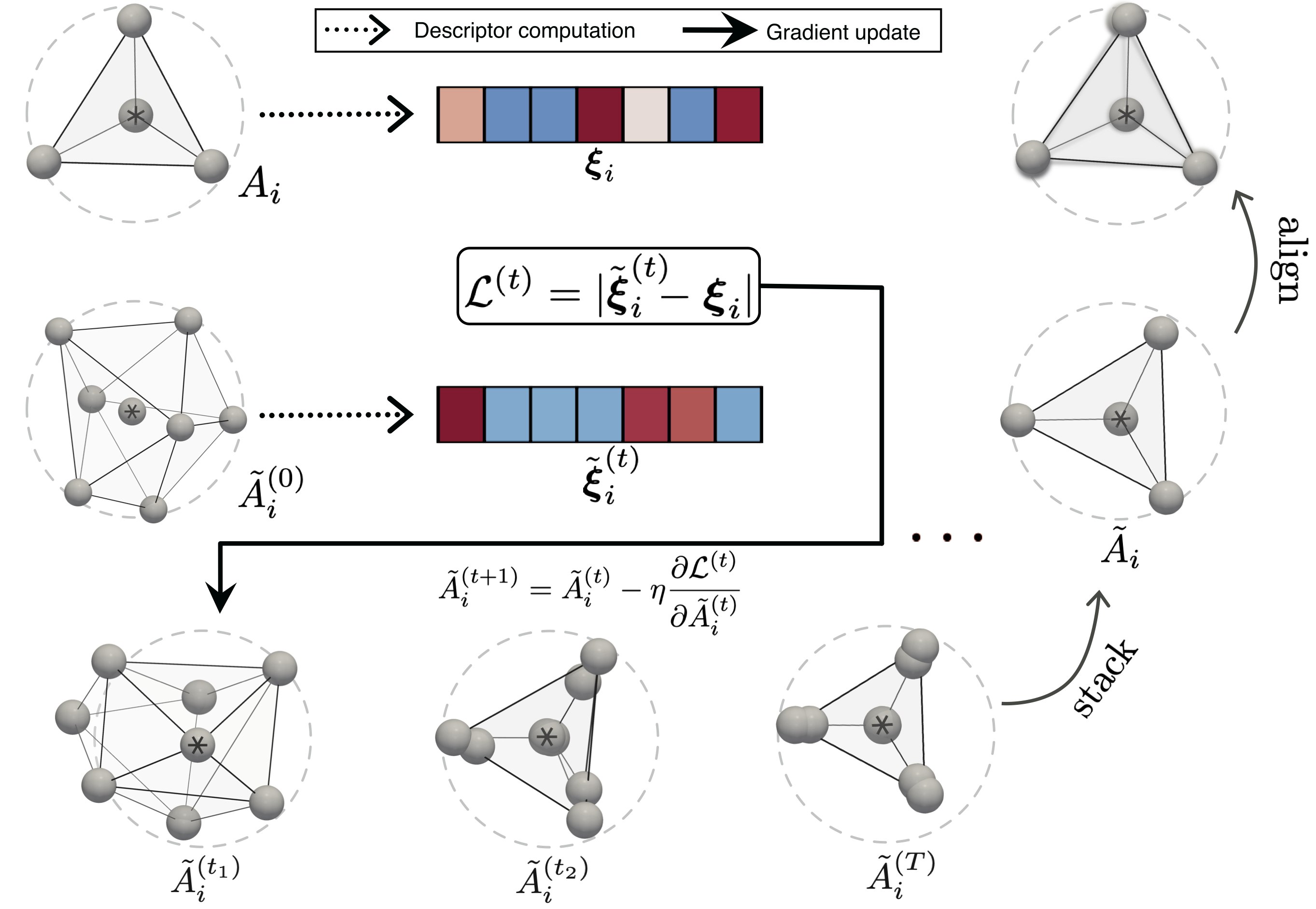 arXiv preprint arXiv:2607.20338, 2026
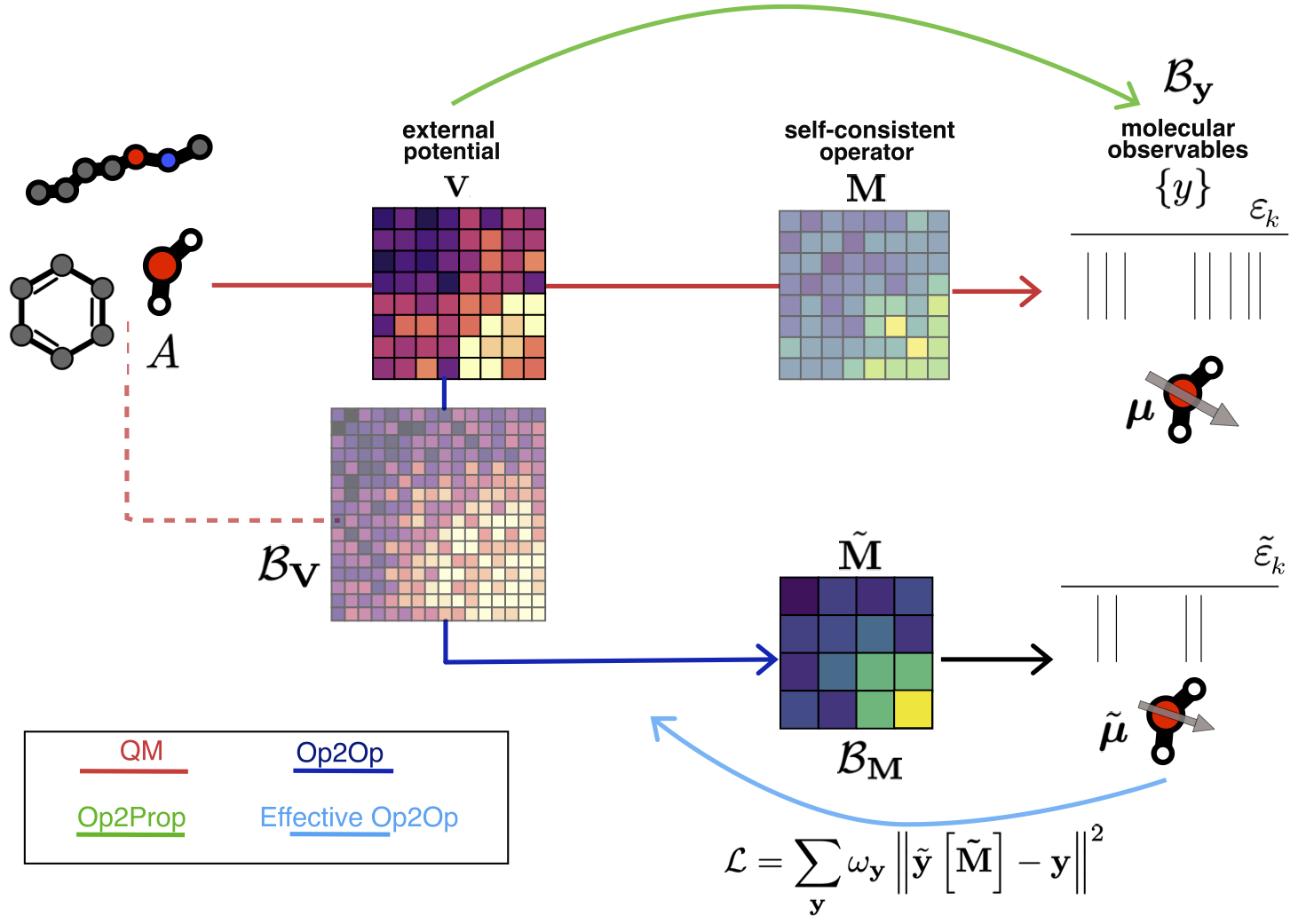 Journal of Chemical Physics, 2026
 Journal of Physics: Condensed Matter, 2026Publisher: IOP Publishing
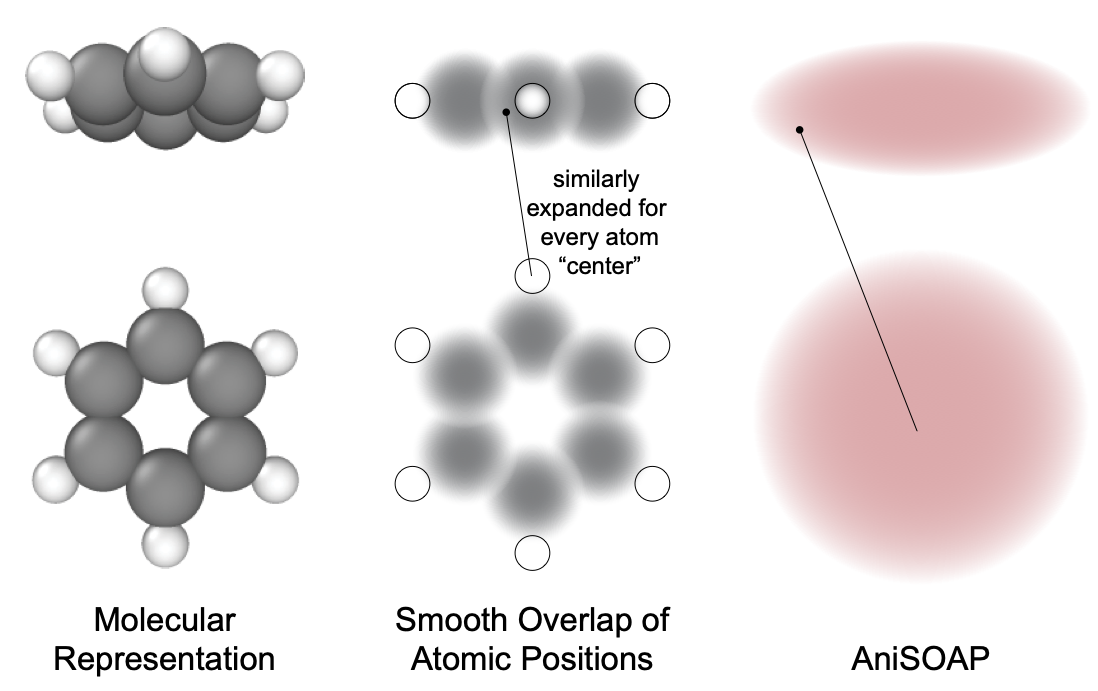 Journal of Chemical Physics, 2024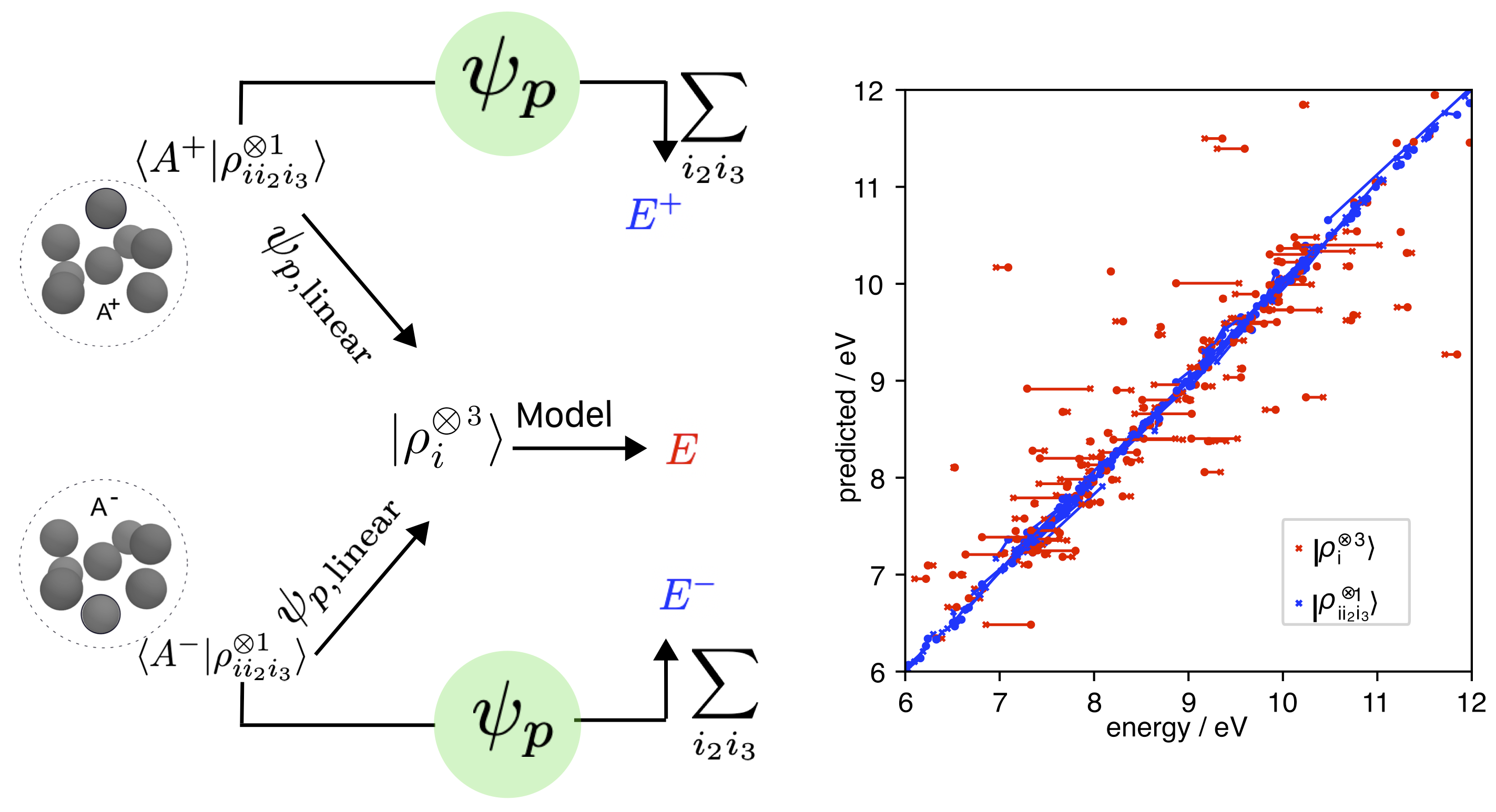
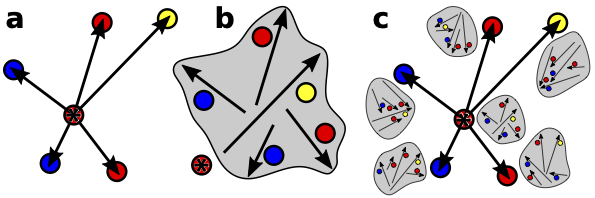 Journal of Chemical Physics, 2022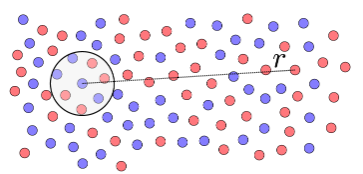
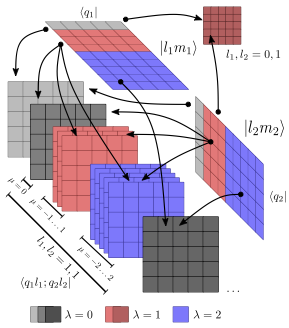 Journal of Chemical Physics, 2020